What Goes Into Your Pet’s Surgery Matters
Surgery is more than the procedure itself. Our approach focuses on your pet’s safety, comfort and recovery from the moment they arrive until they go home.
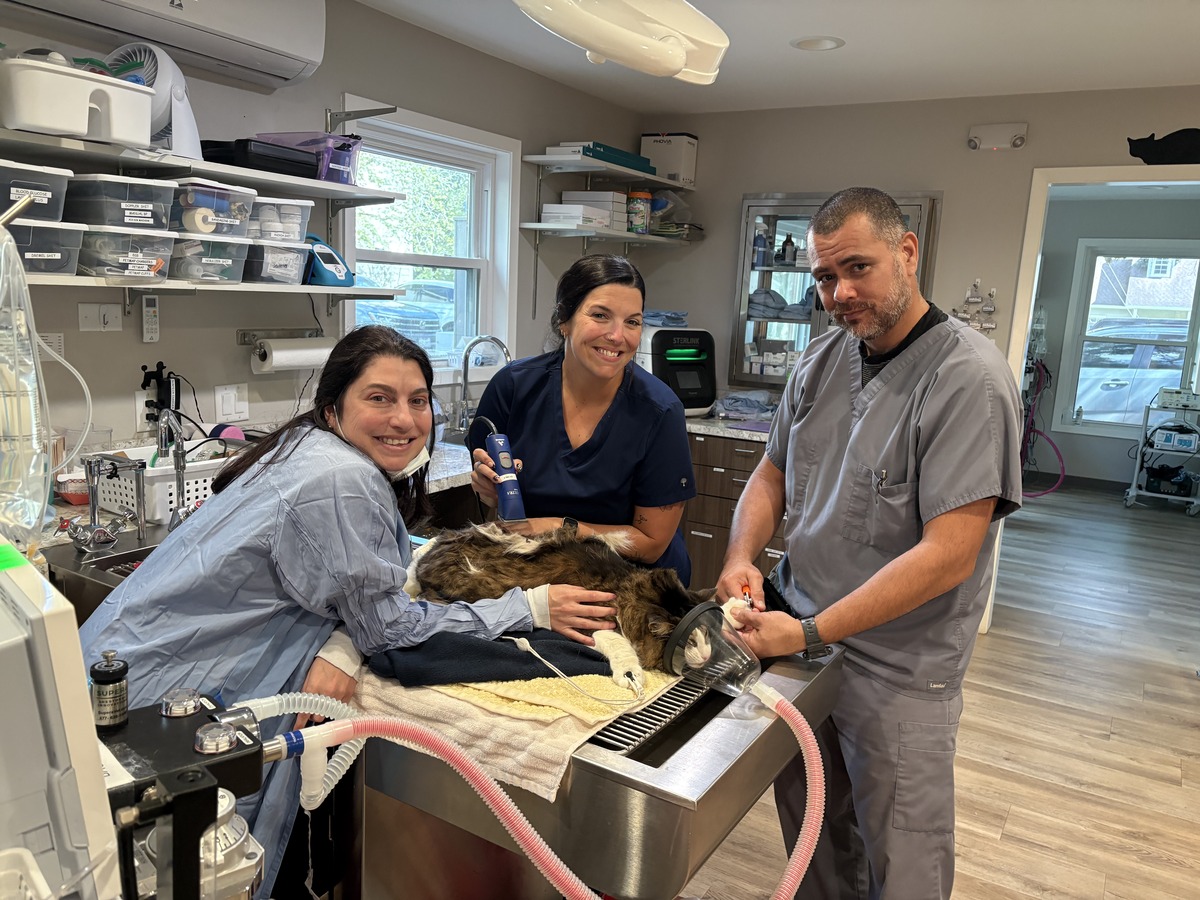
Our surgical patients receive individualized anesthetic protocols, IV catheterization, appropriate pain management and continuous monitoring throughout anesthesia.
What Does Surgical Monitoring Actually Mean at Four Paws?
When your pet is under anesthesia, monitoring isn't just watching a machine. We monitor our surgical patients at a level similar to what you would expect during anesthesia in a human hospital.
Every surgical patient has an IV catheter, giving us immediate IV access throughout the procedure and allowing us to administer fluids and medications when needed.

During anesthesia, our team monitors:
- Blood pressure continuously, allowing us to recognize changes quickly and make minute-to-minute adjustments to anesthesia, fluids or medications when needed.
- Oxygen saturation, so we know how effectively oxygen is being carried in the bloodstream.
- EKG/ECG, so we can continuously monitor heart rate and rhythm.
- End-tidal CO₂, which gives us real-time information about ventilation and how effectively your pet is breathing under anesthesia.
- Body temperature, because anesthetized patients can lose body heat quickly and temperature management is an important part of anesthesia.
- Capillary refill time and other hands-on patient assessments, because we don't rely solely on what a monitor tells us.
The technology is important, but so are the people watching it. Our team is continuously evaluating the patient throughout anesthesia so changes can be recognized and addressed rather than simply recorded.
For us, good anesthesia monitoring isn't about having a monitor attached to your pet. It's about knowing what those numbers mean and responding when they change."
What We Monitor During Anesthesia
Your pet is continuously monitored throughout anesthesia by a trained member of our veterinary team. We monitor multiple parameters because each one tells us something different about how your pet is responding to anesthesia.
IV Catheter
Gives us immediate access to your pet’s vein throughout the procedure for IV fluids and medications and allows immediate access if additional medications are needed.
Blood Pressure
Tells us whether blood is circulating effectively and delivering oxygen to your pet’s organs.
ECG (Electrocardiogram)
Continuously monitors heart rate and rhythm so we can identify abnormal rhythms or changes during anesthesia.
Oxygen Saturation (SpO₂)
Measures how well your pet’s blood is being oxygenated.
End-Tidal CO₂ (ETCO₂)
Measures the carbon dioxide your pet exhales and helps us evaluate how effectively they are breathing and being ventilated.
Body Temperature
Anesthetized patients can lose body heat quickly, so we continuously monitor temperature throughout the procedure.
Active Warming
We don’t just monitor temperature. We use active warming throughout anesthesia and recovery to help prevent heat loss and maintain a safe body temperature.
Respiratory Rate
Tracks how frequently your pet is breathing and helps us recognize changes that may require adjustments or breathing support.
Anesthetic Depth
Our team evaluates reflexes, muscle tone and other physical responses throughout the procedure to make sure your pet is at an appropriate level of anesthesia — not too light and not deeper than necessary.
The Monitor Is Only Part of the Picture
Technology gives us important information, but anesthesia monitoring isn’t simply watching numbers on a screen. A trained member of our veterinary team continuously monitors your pet, evaluates these parameters together, watches for changes and communicates with the veterinarian so adjustments can be made throughout the procedure.
Our goal is individualized anesthesia and attentive monitoring from the time your pet is anesthetized through recovery.